


GALLERY

PUBLICATIONS

NEWS
Church of the Holy Apostles Peter and Paul in Gdansk
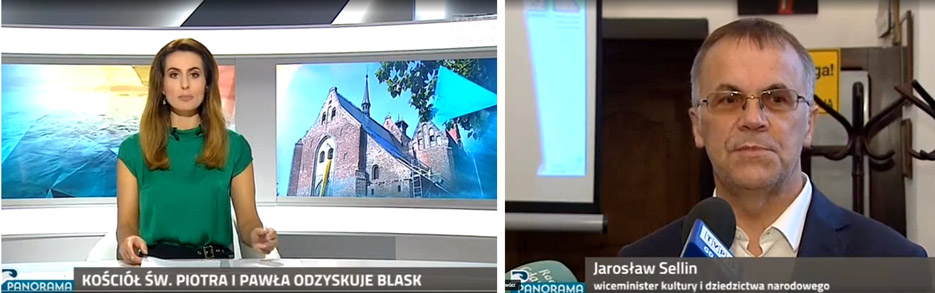 TVP Gdansk_panoramaGdansk_minister J.Selin
On June 2 last year, a fire broke out in the attic of the Church of Saints Peter and Paul. Fortunately, it did not harm the main part of the Church, but it seriously damaged the eastern roof truss. The church, one of the oldest in Gdansk, needed immediate renovation. The authorities of Gdańsk and the Ministry of Culture and National Heritage came with help. Currently, the renovation is coming to an end.
According to TVP Gdansk in the program on 26/9, Jaroslaw Sellin, Deputy Minister of Culture and National Heritage, visited the Church. By the way, he was here together with Minister Piotr Glinski right after this unfortunate event. The parish parson, priest Cezary Annusewicz, once again made a huge effort to rebuild the Church of Saints Peter and Paul
The title of the material that appeared on the TVP3 Gdansk website is;
“Church of Saint Peter and Paul recovers its splendor after the fire”.
Armenika at the virtual exhibition of the National Institute of Ossolinskis in Wroclaw
 “GOLDEN AGE OF JAGIELLONS” – it is a virtual exhibition prepared on the occasion of the 500th anniversary of the birth of King Sigismund II Augustus. It was implemented by the National Institue of Ossolinskis’ in Wroclaw from the collections of the National Institute of Ossolinskis’, the National Museum in Krakow, the Lviv National Library of Ukraine named after W.Stefanyk, Foundation of Culture and Heritage of Polish Armenians and private collections. The curator of the exhibition is dr Dorota Sidorowicz- Mulak , and the descriptions to the armenikas presented at the exhibition were prepared by dr Andrzej A. Zieba.
We invite you to see these unique exhibits, take advantage of educational games and interactive texts and listen to a concert of vocal music from the Jagiellonian era.
The exhibition is available under address; www.zlotaepoka.ossolineum.pl
Armenika from the collections of the Foundation are available in the section Society and Economy ….:armenika (Spoleczenstwo i Gospoda ….:armenika).
-

- Baptismvs Armenorvm … Adiecta est prætera purificatio mulieris Armenæ post partum in calce libelli Dzieło dotyczące sakramentu chrztu w obrządku ormiańskim wydane w Krakowie w 1544
-
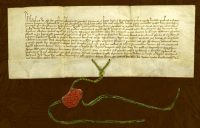
- Potwierdzenie przywileju wystawionego przez króla Kazimierza Wielkiego w 1367 roku dla Grzegorza, biskupa Ormian polskich we Lwowie, wydane przez króla Władysława Jagiełłę w 1388
-
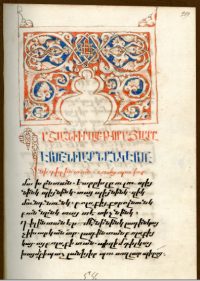
- Statuty prawa ormiańskiego, Lwów, prawdopodobnie z 1528
AGBU helps Armenians affected by the pandemic of COVID 19
The Organization Armenian General Benevolent Union (AGBU) – its headquarters are in Brussels – has launched the initiative Humanitarian Energy Relief Fund in order to support thousands of Armenians in the whole world affected by the pandemic COVID 19 and most exposed to morbidity. You may join this action of help; www.agbugiving.org/reliefefforts/
GORIZ – Program of AGBU related to the development of leadership
Nicolas Tavitian, director of AGBU Europe describes the GORIZ program in this way;
“As recent events in Armenia have shown the history is still being created and Armenians in the world perspective could be a good example of a brave nation deciding of the shape of its future. (…) Armenian nation requires a new generation of effective leaders to be able to face together new challenges. (…) “
Tavitian underlines that everybody of ourselves can have own contribution to the Global Armenian Nation . The Program as such is destined for the group composed of 15 men and 15 women who are to start on the six-month Development of Leadership journey. This journey will be composed of lectures, experimental workshops and activities referring to social relations.
Within the Program GORIZ AGBU Europe organizes the open live Seminar “Leading the Self, Others and Organizations’’ on the 4th of July 2020 at 15.00 hrs. Registration; www.leadership.am The seminar will be conducted by Armen Ovanesoff, chief director of Accenture, The link to this event is; https://www.facebook.com/events/626986528173120/
105th ANNIVERSARY OF ARMENIANS GENOCIDE
 24th April 1915
The murders of the Armenian people began on the 24th of April 1915. Most of Armenian intelligentsia were arrested and killed. The further step was deportation of Armenian Community from subsequent regions of Turkey to Mesopotamia and Syria.
It was connected with many weeks forced marches through wilderness and deserts. During these marches deportees were robbed ,tortured and murdered. In total over one million of Armenians were deprived of life. To this day, Turkey refuses to recognize these mass murders as genocide.
On 23rd of April in the Polish TV channel TVP Historia at 20.00 hrs was presented the film dedicated to the said topic. It is available online; ludobojstwo-ormian
 Priest Professor Józef Naumowicz
Pastor of Armenian Catholics
gave us the following message;
On April 24, I urge you to celebrate in a special way the day of remembrance of the genocide of Armenians We cannot as every year gather at Khachkars in various centers in Poland (Kraków,Wroclaw, Gdansk, Warszawa, and others) in order to pray together, lay flowers, pay homage to the victims. We cannot walk through the streets of cities in memory marches with banners and Armenian flags in order to constantly remind everybody about this tragedy. However, we can cultivate this memory individually or in families. We can also pray for the victims of this slaughter, for peace and pray to the Armenian martyrs.
I wish to remind you that we have Holy Armenian martyrs.
- Armenian Catholic Archbishop of Mardin in Turkey Ignacy Maloyan was beatified in Vatican by the Pope John Paul II in 2001.He was killed of martyrs death. He was imprisoned and subjected to terrible torture. He refused to convert to Islam. He was sentenced to be shot. Before execution on 11th of June 1915 he rejected the offer to save his life for the price of renouncing his faith.’
- In August 2015 Flawian Michal Melki Syrian Catholic Bishop was beatified. He was murdered during the genocide of Armenians and Assyrians on 29th of August 1915 for refusing to convert to Islam. The solemn beatification took place in Lebanon. On behalf of the Pope Francis Cardinal Angelo Sodano was leading the Ceremony.
- On 23rd of April 2015 Armenian Apostolic Church canonized victims of the Genocide from the beginning of 20th Century recognizing them as martyrs. Taking into consideration the number of candidates for altars it was , as it seems to be, the biggest canonization in the history of Christianity ( 1,5 mln of martyrs ). This very canonization was carried out (then on the eve of the 100th anniversary of the tragic events – 24th of April 2015 ) by two Armenian Catholicoses Karekin II and Aram I. At the Ceremony were present representatives of other denominations and among them Roman Catholic and Armenian Catholic churches.
24th of April was designated as the day of holy martyrs in the Apostolic liturgy calendar. They suffered martyr’s death for their faith and homeland during the genocide of Armenians. It is therefore the new saints memorial day.
Let the symbolic forget-me-not flower purple and blue be a sign of the tragedy and at the same time sign of fortitude, glory and faith of Armenian martyrs of years 1915-17 who were killed for their homeland and Christian faith.
On 24.IV I will be praying individually by the Khachkar at Ormianski Skwer (Warszawa Sadyba) and by the Khachkar near the Temple of God’s Providence (Warszawa-Wilanow).
Priest Józef Naumowicz
ON STANISLAWOW PARISH IN PRZEGLAD WSCHODNI (EASTERN REVIEW)
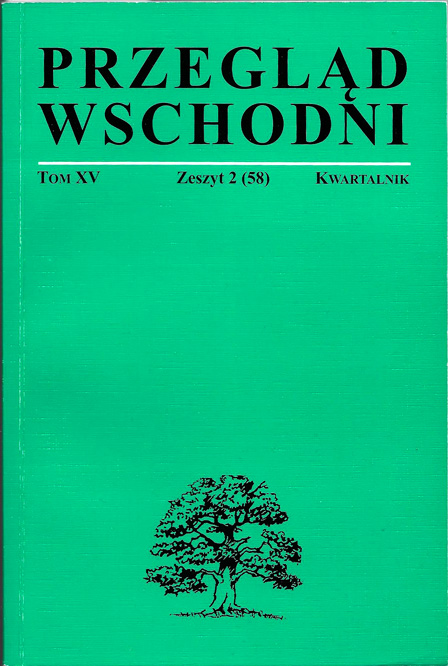 In the issue no 2 (58) of the quarterly Przegląd Wschodni (Eastern Review) you can find the text of Marcin Tyszka in which the author discusses the activities of the Armenian-Catholic Parish in Stanislawów. The full title of this article is “Before the destruction; From the history of the Armenian Catholic Parish in Stanisławów in the last years of its existence”. Marcin Tyszka using among others documents available in the Foundation of Culture and Heritage of Polish Armenians describes the most important events of the Parish life presenting its picture in the last years of independence and the period of occupation. He quotes the information about the constant church services and the celebrations related to the liturgical calendar. He quotes as well the coverage of major events like the coronation of the image of Gracious Lady in 1937 which appeared to be a unique celebration in the life of the Parish and Stanislawów city. In the presented text we also see how the years of occupation forced the Parish to reduced activities limited mostly to beseeching services and holy masses with the intentions “ for a happy return”. The author appreciates especially the great commitment of acting there priests despite a lot of difficulties which were taking place in connection with tragic times.
In the same number of Przeglad Wschodni (Eastern Review) Dariusz Maciak prepared a chronicle of the most important events from 2026-2018 that took place in centers in Poland associated with the celebration of the 650th anniversary of the granting of the privilege for Polish Armenians by King Casimir the Great in 1367.
red
AWEDIS 42.
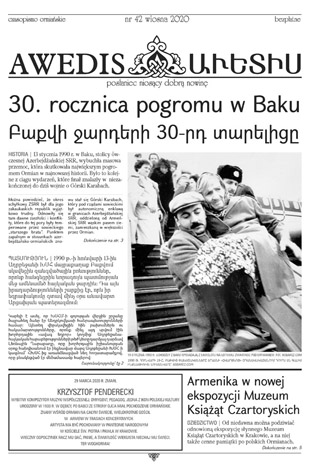 (Word from the editor)
Dear Readers.
We did not think that such a moment would ever come, and yet it came. Wherever you look there is only one valid topic – epidemic. The scale and speed of spreading of the virus are unheard of in the 21st century. There is an extremely difficult situation of individuals, enterprises, organizations and lastly countries and the whole world. There are uncertainty of tomorrow and hardships of quarantine. However, we know all this and we must somehow survive this difficult time. You also have to remember about the hard work of people on the front lines – doctors, nurses and rescuers.
We should think whether, in this situation, we cannot help anyone, even at a distance. In the meantime, however, our editors continue their work hoping that the articles in “AWEDIS” will help at least for a moment to divert attention from what is outside the window and take time when we almost do not go outside. In our magazine as always there are many memories, biographies and a lot of history. There are as well coverage of events and presentation of new publications. We hope, and we believe you certainly do, that the situation will get improved as soon as possible and that life will soon return to normal. to download.
Editorial office
THE LATEST ISSUE (Number 6) OF LEHAHAYER
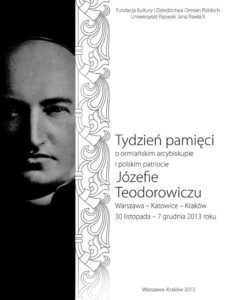
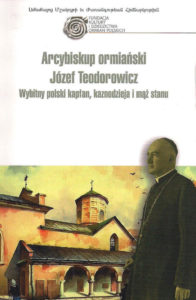
 The sixth issue of the magazine devoted to the history of Polish Armenians has just been published – “LEHAHAYER”. As usual, its content is very interesting. Monika Agopsowicz undertakes attempts to reconstruct the list of names of Kamieniec Armenians in the 17th century. Dorota Jarzabek-Wasyl writes about enterprising Warsaw Armenians of whom Szymonowicz most probably became the archetype of character from Bohomolec comedy. Maksym Potapenko describes Armenians from Mohylow Podolski, while Father Marek Milawicki quotes sources of Armenian Catholic Church history from Vienna collections. You may also find there a very interesting lecture by Wahan Ohanian, mekhitarist from Venice on Gewondian Alishan , the 19th century poet and historian from Armenia, who was as well a monk and intellectual. Tomasz Krzyzhowski talks over the correspondence between the Archbishop Joseph Teodorowicz and the Primate Cardinal Augustyn Hlond. Romana Obrocka elaborates the Letters from Lagr (Concentration Camp) by Isaaak Antoni Donigiewicz.
In the part of the magazine called “Voices, Reviews, Information” one may find among others; Krzysztof Stopka returns to the fate of the Gospel from Skewra. Andrzej Pisowicz takes out origin of the name Penderecki. Andrzej Zieba writes about the discovery from Jass which might turn out to be the picture by T.Axentowicz “Baptism of Armenia” ordered originally by the Priest Bogdanowicz for the Church in Suczawa. Andrzej Zieba is also the author of the report about inauguration of activities of the Research Center on Armenian Culture in Poland.
EXTRAORDINARY DISCOVERY IN THE COLLECTIONS OF VENICE MEKHITARISTS
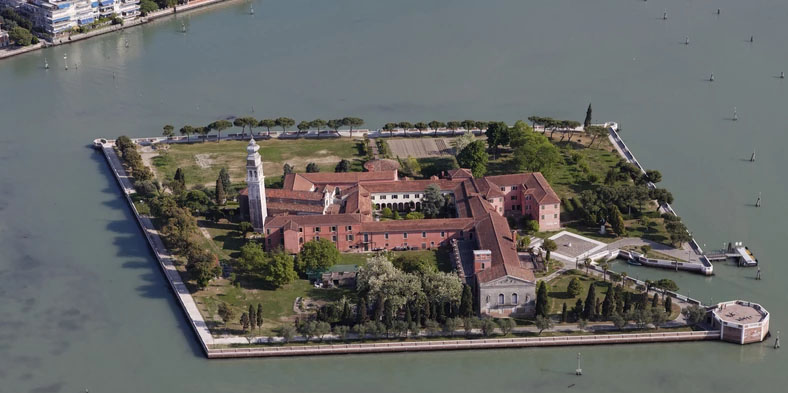 According to Onet news (wiadomości.onet) the Italian archaeologist, candidate for doctor’s degree Vittoria Dall’Armellina when visiting the monastery of Armenian Mekhitarists at the Italian Island of San Lazarro in 2017 has noticed in the collection the sword which, according to her opinion, was much older than its description attached. After detailed research works it appeared that this sword was given to monks 150 years ago by an Armenian collector. It is 5,000 years old and comes from before the bronze age as evidenced by the alloy from which it was made. According to available documents the sword was found near the town of Trabzon at the south-east coast of Black Sea. By the way, it is interesting what extraordinary treasures are still hidden in the magnificent collections of the Armenian Monastery. One may find more details about this sensational discovery; https://wiadomosci.onet.pl/swiat/wlochy-doktorantka-archeologii-odnalazla-miecz-sprzed-pieciu-tysiecy-lat/vxrp86x
ARMENIAN LANGUANGE COURSE AND OLD ARMENIAN LANGUAGE (GRABAR) FOR ADULTS
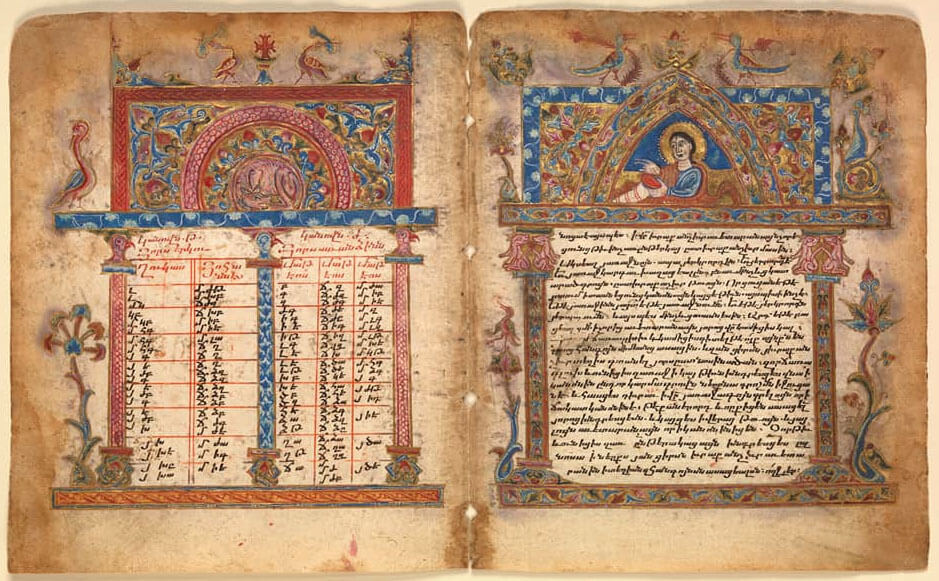 Armenian Cultural Society cordially invites for the following language courses;
• Modern Armenian Language (Aszcharabar) in the East Armenian variant used in Armenia, Georgia and Iran,
• Old Armenian Language (Grabar) used among others in the Liturgy of Armenian Apostolic Church and Armenian Catholic Church,
Classes are run by Professor, dr Mr Andrzej Pisowicz, retired Professor of the Jagiellonian University in Cracow
Classes take place on Wednesdays – 15:15 hrs (Grabar) and on Fridays (Aszharabar) – 10:20 hrs
at the headquarters of the Armenian Cultural Society – 2, Studencka str., Cracow
Those who are interested in taking part are requested to contact email address otk@otk.org.pl